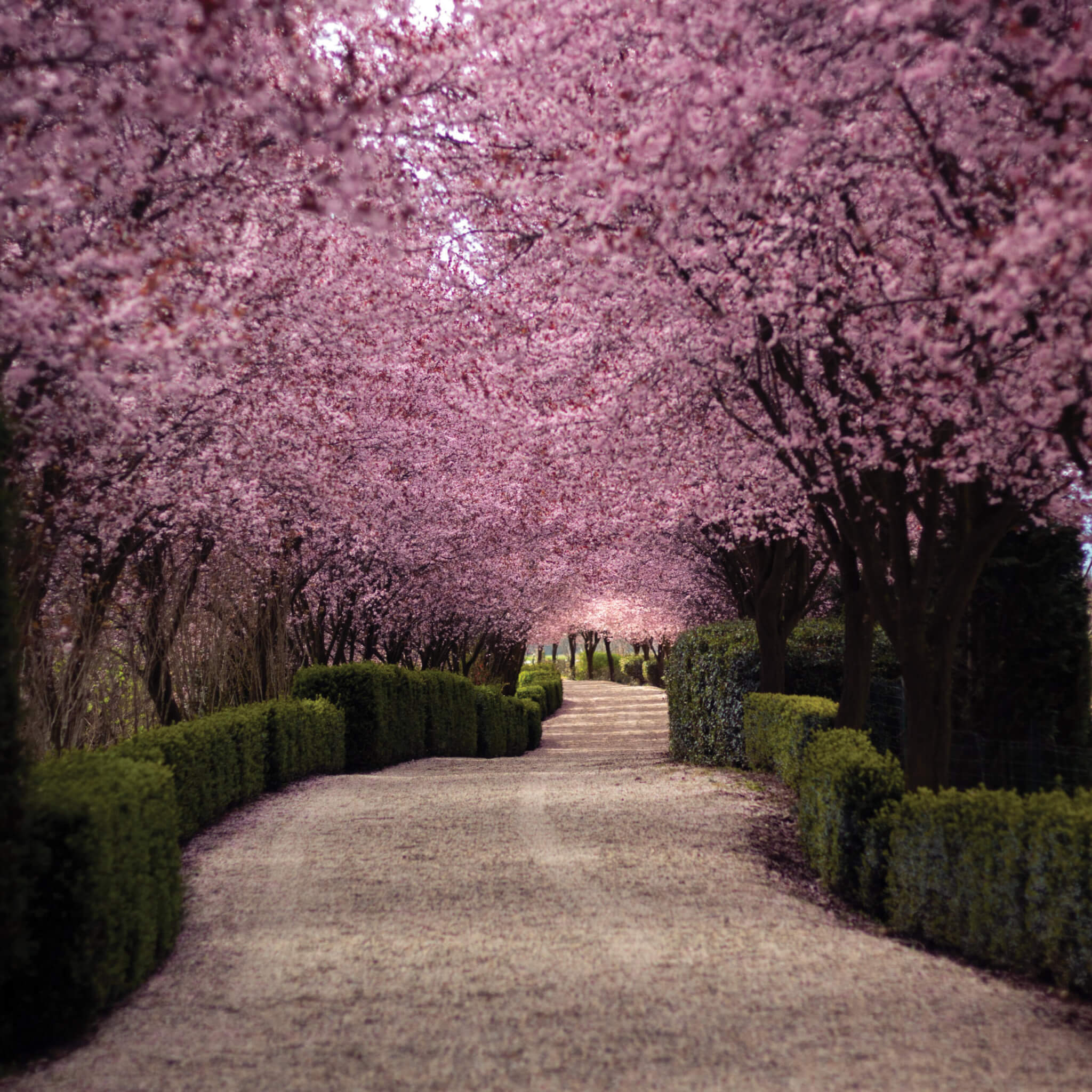
The first rule of cherry blossom travel is that the tree has not signed your itinerary.
As of July 2026, there is no reliable city-by-city forecast for Japan’s 2027 cherry blossom season. Forecasts are issued closer to spring and are revised as temperatures develop. Anyone selling exact bloom dates this far in advance is offering certainty that the season itself does not provide.
That does not mean you should wait to book. Sakura season places intense demand on the best hotels, private guides, ryokans and train routes. The sensible approach is to reserve a beautiful journey within the historical bloom window, build geographic flexibility into the route and treat peak blossoms as a natural privilege rather than a guaranteed service.
Japan’s blossom front usually begins in warmer southern regions and progresses north, broadly from March into May. Tokyo and Kyoto often attract the greatest attention in late March and early April, while Tohoku and Hokkaido offer later possibilities. Individual varieties, elevation and local microclimates create additional windows.
The classic first journey: Tokyo, Hakone and Kyoto
Tokyo gives the season scale. Blossoms line rivers, fill parks and appear beside contemporary architecture. The finest experience is not necessarily the largest public gathering. A private morning walk, a garden visit timed before peak crowds or a discreet boat along a blossom-framed waterway can feel far more personal.
Hakone provides a pause between cities. A ryokan with a private onsen, views towards Mount Fuji when conditions allow, and a carefully served dinner changes the rhythm of the trip. One night is possible, but two prevents the stay from becoming a complicated bath between train journeys.
Kyoto is the emotional centre of many sakura itineraries. Temples, canals, gardens and old streets create the images travellers expect. They also attract exceptional crowds. Stay centrally enough to begin early, use a guide selectively, and reserve a private vehicle only on days when it genuinely improves access. At other times, trains and walking may be more efficient.
A quieter route: Kanazawa, Takayama and the Japanese Alps
Travellers who have already seen Tokyo and Kyoto, or who dislike building an entire holiday around the busiest cities, should consider Kanazawa and the alpine regions.
Kanazawa combines one of Japan’s celebrated gardens with samurai districts, craft traditions and excellent food. Takayama offers timber architecture, mountain culture and access to surrounding villages. Matsumoto can add a castle, design and a different regional rhythm.
Bloom timing varies across these areas, and altitude can create later moments. The route should be designed for culture first, with blossoms as a seasonal layer. That makes the journey resilient and often more intimate.
A later journey: Tohoku and Hokkaido
Travellers unable to visit during late March or early April need not abandon the idea. Northern Japan commonly blooms later. Hirosaki in Aomori is known for thousands of cherry trees around its castle grounds, while Hokkaido can extend the season towards late April and, in some areas, early May.
A northern route feels different from the classic Golden Route. Landscapes are broader, crowds may be less international, and the journey can include hot springs, local food and nature. It is particularly suitable for repeat visitors or travellers who value seasonal depth over famous city names.
The trade-off is transport planning. Distances are greater, and some routes benefit from domestic flights or carefully sequenced rail. This is where a bespoke design earns its value.
Early blossoms and alternative varieties
Kawazu-zakura bloom earlier than the most familiar Somei Yoshino variety and can create a February or early March opportunity in parts of the Izu Peninsula. Weeping cherries and later-blooming varieties can also extend the visual season within gardens and parks.
A good itinerary includes more than one type of viewing location: a major park, a temple garden, a riverside route and a destination with mixed varieties. This does not guarantee blossoms, but it reduces dependence on one exact day and one exact tree.
When should you book for 2027?
For premium rooms in Tokyo and Kyoto, special ryokans, family suites and private guides, planning eight to ten months ahead is reasonable. Flights can be reviewed as schedules open, while restaurants and certain rail reservations may only become available closer to travel.
The booking should be staged. Secure the scarce structural elements first: flights, core hotels and specialist guides. Add experiences according to their release dates. Revisit the route when official forecasts begin appearing, but avoid dismantling the entire journey in pursuit of a few days’ movement in the bloom front.
Cancellation terms deserve particular care. Sakura demand produces restrictive conditions, and last-minute changes can be expensive. Travel insurance should reflect the total prepaid value, but standard policies do not compensate merely because blossoms opened earlier or later than hoped.
How to experience hanami respectfully
Cherry blossom viewing is a living Japanese custom, not a private set. Follow local rules regarding picnics, photography, litter and restricted areas. Do not touch branches or step into planted spaces for a photograph. A guide can explain the cultural idea of impermanence that gives sakura much of its emotional significance.
Private access should also be described accurately. Some gardens offer reserved experiences or special opening hours, but public heritage cannot always be closed for an individual guest. Luxury in Japan often means excellent timing, interpretation and restraint rather than physical exclusion of everyone else.
A ten-night structure that remains beautiful with or without peak bloom
- Four nights in Tokyo for neighbourhoods, gardens, food and one flexible sakura day.
- Two nights in Hakone or another onsen region for rest and landscape.
- Four nights in Kyoto, including a private cultural experience and one day outside the city.
A longer journey can add Kanazawa or Osaka. A repeat visit can replace the classic route with Tohoku, the Japanese Alps or Hokkaido. The principle remains the same: the country must be worth visiting even if the blossoms do not conform to the forecast.
Plan for beauty, not a prediction
Japan during cherry blossom season can be exquisite, crowded, emotional and unpredictable at the same time. The correct response is not to demand certainty. It is to design intelligently around uncertainty.
Book early, choose more than one viewing context, respect the seasonal nature of the bloom and allow the hotels, food, craft, gardens and people of Japan to carry the journey. Then, when the petals arrive, they do not have to rescue the holiday. They simply make an already exceptional journey briefly unforgettable.
Sakura timing is uncertain; excellent planning need not be. Let us create a Japan journey with beauty built into every possible outcome. Speak to a Tamarind Global Holidays Travel Specialist.