Where the River Carries Stories
Some places announce themselves loudly.
Others — like Maheshwar and Mandu — whisper softly, and somehow stay with you longer.
Central India’s landscape is gentle, contemplative, full of stories etched not in gold or marble, but in river mist, temple bells and moss-covered stone.
Here, along the sacred Narmada, devotion blends with design, and romance lingers in the air like incense.
This is a journey for travellers who want India without the rush — the India of river rituals, handlooms, poetry, palaces and ruins that glow at sunset.
A journey Tamarind Global curates with depth, silence and elegance.
Maheshwar — The River Queen of Madhya Pradesh
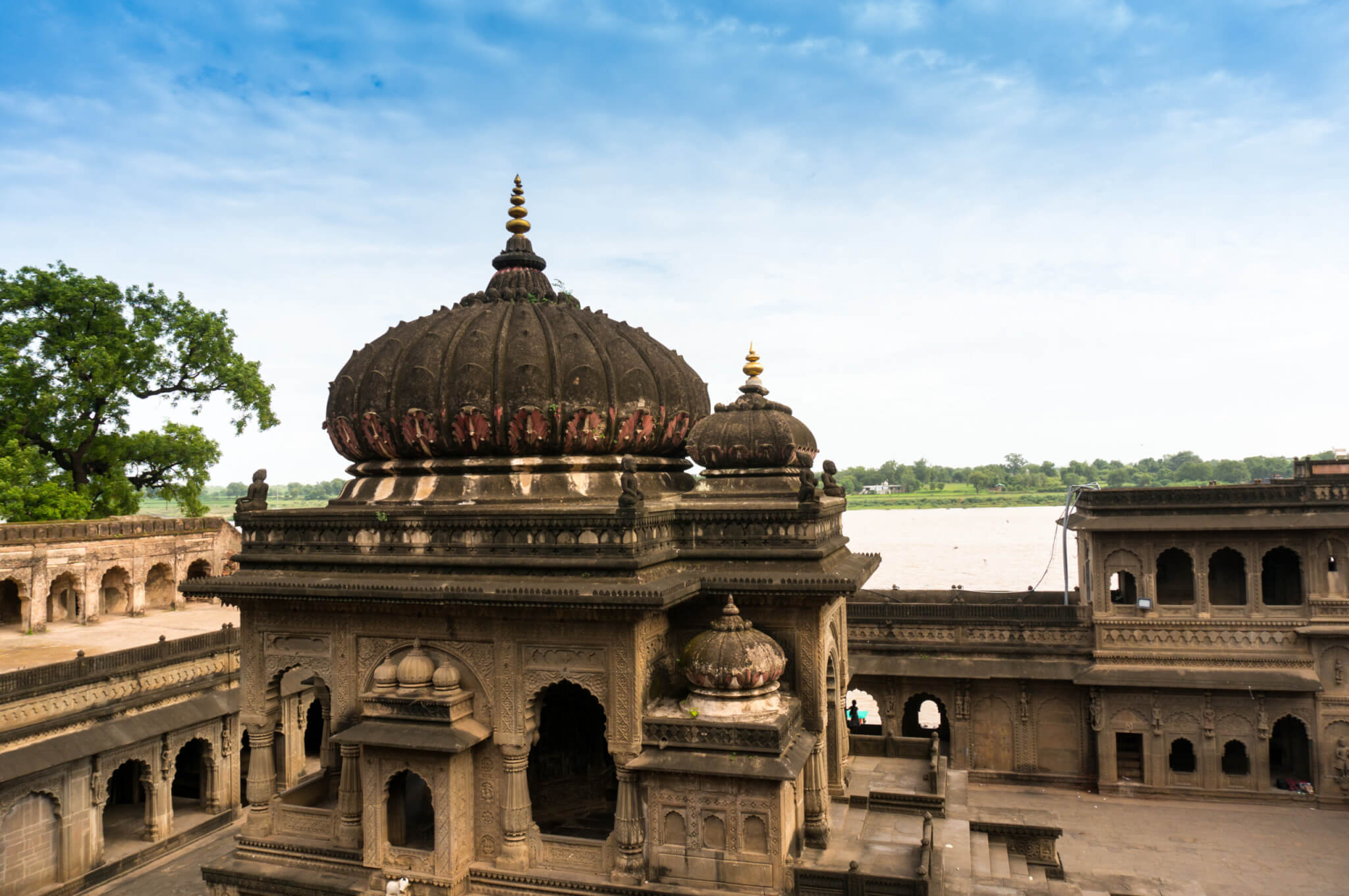
Maheshwar rises from the banks of the Narmada like a hymn.
Sandstone ghats sweep into the river in cascading steps, saffron-clad women float diyas at dawn, and the sound of temple bells blends with boat oars slicing across molten-blue water.
This town, once the seat of Queen Ahilyabai Holkar, remains a rare blend of spirituality, craftsmanship and serenity.
The Sacred Rhythm of the Ghats
Every morning in Maheshwar feels ceremonial.
Priests recite mantras.
Women carry offerings in brass thalis.
The river glows pink as the first light hits the ghats.
Even non-pilgrims feel moved by the quiet reverence that permeates this space.
You can sit on the steps for hours, watching life ebb and flow, feeling the pulse of a city that has never really stopped praying.
Maheshwari Weaving — A Loom of Legacy
Maheshwar is famous for its textile tradition — the Maheshwari sari, a fabric first revived by Ahilyabai Holkar in the 18th century.
A visit to the Rehwa Society or local weaving clusters reveals:
- Wooden looms echoing centuries-old rhythms
- Weavers crafting lightweight silk-cotton sarees in gold, maroon, peacock blue and ochre
- Intricate borders inspired by temple architecture and river motifs
- The mesmerizing interplay of warp and weft
For travellers interested in craft tours or responsible fashion, Maheshwar is a living museum. Watching a sari take shape is like witnessing poetry woven into fabric.
Ahilya Fort — A Palace of Peace
Perched above the river, Ahilya Fort is the soul of Maheshwar.
Where most palaces overwhelm, this heritage retreat embraces — courtyards with flowering frangipani, verandahs overlooking the water, rooms filled with heirlooms and handwoven textiles.
Staying here feels like staying in someone’s ancestral home — because in a way, you are. Richard Holkar, a descendant of Ahilyabai, restored the fort into a retreat that honours her reign of compassion and wisdom.
Experiences at Ahilya Fort Include:
- Private dinners illuminated by floating oil lamps
- Sunset boat rides where the river glows silver
- Farm-to-table meals crafted from family recipes
- Garden naps under bougainvillea-draped terraces
- Tea served on stone balconies overlooking Narmada’s bend
This is luxury that feels intimate, rooted, timeless.
Mandu — India’s Most Poetic Ruins
An hour’s drive from Maheshwar, the landscape changes — temples give way to hills, ghats to plateaus, devotion to desire.
Welcome to Mandu, the former pleasure capital of the Malwa Sultans.
A city of palaces, ponds, pavilions and love stories that survived kingdoms.
Where Maheshwar is prayer, Mandu is poetry.
The Love Story of Baz Bahadur & Roopmati
Mandu’s heart beats with one of India’s most romantic legends.
Baz Bahadur, a warrior-king.
Roopmati, a singer whose voice rivalled the river’s song.
Their love, forbidden and fragile, lives on in melodies that drift across Mandu’s valleys at dusk.
Visit their pavilions and you will feel it:
- Roopmati’s Pavilion, perched on a cliff, offers sweeping views of the Narmada—a river she worshipped.
- Baz Bahadur’s Palace resonates with arches that once amplified her music.
These ruins don’t just show history — they echo it.
Jahaz Mahal — The Ship Palace That Floats on Dreams
One of Mandu’s most iconic structures, Jahaz Mahal, sits between two lakes and appears to float on water.
Built as a pleasure palace, its courtyards, balconies and water channels capture monsoon breezes and moonlight like nowhere else.
Visit at dusk and watch the palace blush gold — it feels surreal, like a dream half-remembered.
Hindola Mahal — The Swinging Palace
With its sloping walls, Hindola Mahal seems to sway — an architectural marvel that has perplexed historians and delighted travellers for centuries.
It is easy to imagine dancers twirling here, their footsteps echoing across stone.
Craft, Cuisine & Quiet Corners
Maheshwar and Mandu mirror each other through contrast — devotion versus romance, river versus ruin, dawn rituals versus twilight silhouettes.
Together, they offer:
Handicraft markets
Maheshwari stoles, brass artefacts, handmade pottery.
Regional cuisine
Dal baafla, mawa bati, river-fresh fish, poha jalebi breakfasts.
Slow travel experiences
Storytelling walks, riverside picnics, heritage photography tours, meditation spots overlooking ancient landscapes.
This is Central India for connoisseurs — immersive, gentle, and rich in detail.
Staying in Style
Tamarind Global Holidays curates the region’s best stays:
In Maheshwar:
- Ahilya Fort – boutique, historic, intimate
- Luxury riverside retreats with handcrafted design elements
In Mandu:
- Boutique hotels with stone cottages and infinity views
- Retreats inspired by Persian arches and plateau landscapes
Both towns offer calm — the kind that wraps around you softly.
When to Visit & How to Pair the Journey
Ideal Season:
October to March — cool weather, clear skies, perfect for heritage walks and river mornings.
Recommended Itinerary:
- 4 to 5 nights split between Maheshwar and Mandu:
- 2 nights in Maheshwar for ghats and weaving
- 2 nights in Mandu for ruins and romance
- Optional add-on: Indore, Omkareshwar, Sanchi, or Bhopal
Tamarind Global can weave these into a beautifully paced circuit.
A Love Letter to Central India
Maheshwar and Mandu remind us that history is not just in grand battles or dynasties — it is in looms, songs, courtyards, and river bends.
Here, India reveals its softer, more lyrical side.
A journey through these towns feels like reading a love letter written in stone and water — one that lingers long after you return home.
For travellers seeking intimacy, culture, craft and soul — Maheshwar and Mandu are not just hidden gems.
They are eternal ones.